


Loss Prevention Trainings
There are educational trainings specifically geared for law enforcement and detention operations designed to improve the knowledge, skills, and abilities employees need to possess to perform specific jobs, reduce liability, and obtain professional development.
Our Loss Prevention Department also offers courses and onsite inspections that teach county members the risks and causes of incidents in their facilities and that help expand their understanding of supervision, management, and other skills. For inquires about Loss Prevention training opportunities, please contact us by email.
Upcoming Loss Prevention Trainings
View future trainings in the calendar HERE.
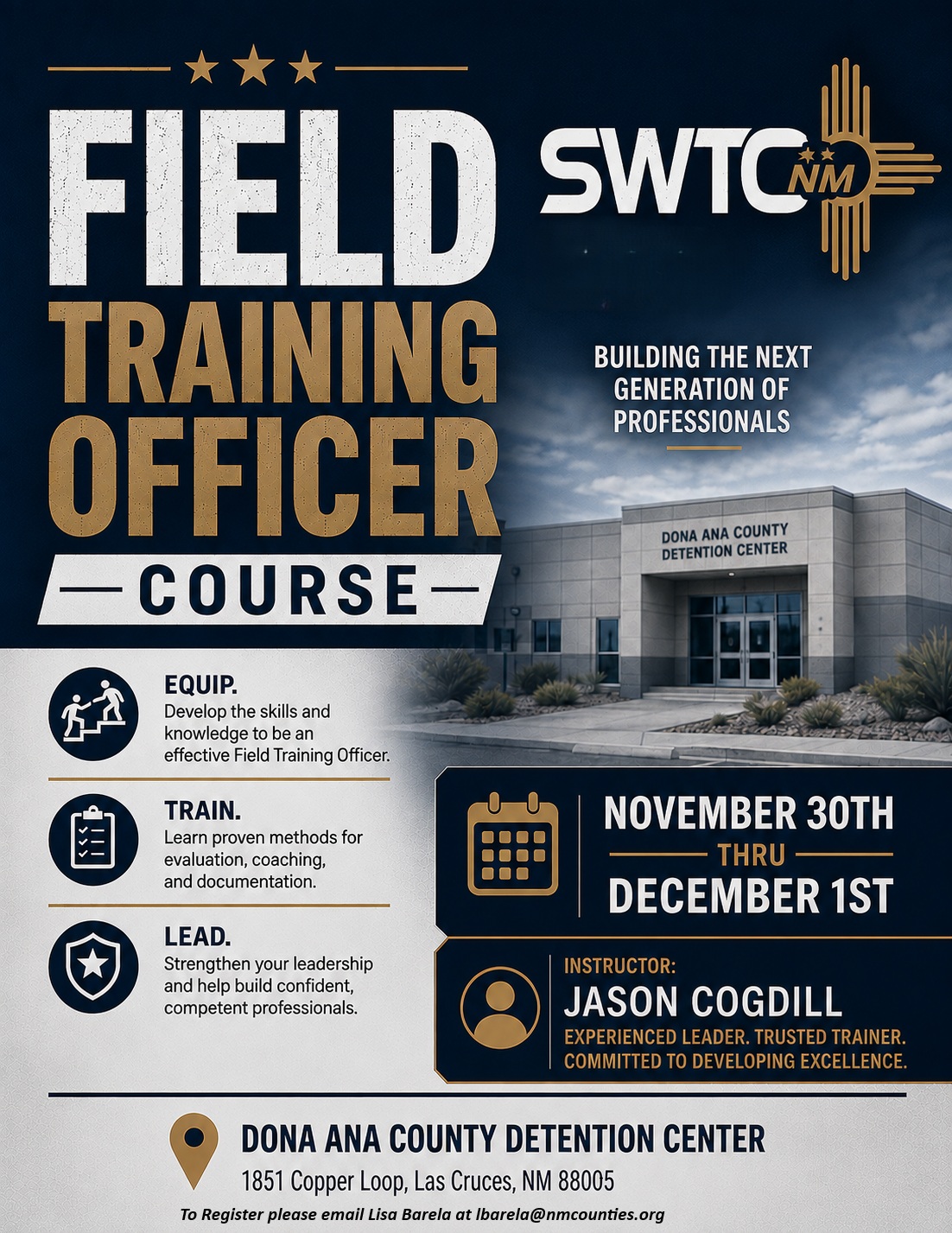
Subscribe to filtered calendar
- Crisis Intervention Training (CIT) for public safety
- Instructor development training for detention centers (40-hour trainer development)
- Adult Detention Center Officer Training Curriculum
- Mental Health First Aid training for law enforcement and emergency response personnel
- Prison Rape Elimination Act (PREA) training
- Defensive driving for law enforcement
- Defensive driving train the trainer
- CPR, First Aid, AED & blood borne pathogen training
- Harassment prevention training
- Crisis Negotiations Training (CNT) for patrol officers
- OSHA general industry 10-hour training
- General safety training
- Local GovU online training and administration

444 Galisteo St, Santa Fe, NM 87501 | Phone: 505-983-2101 | Toll Free: 877-983-2101